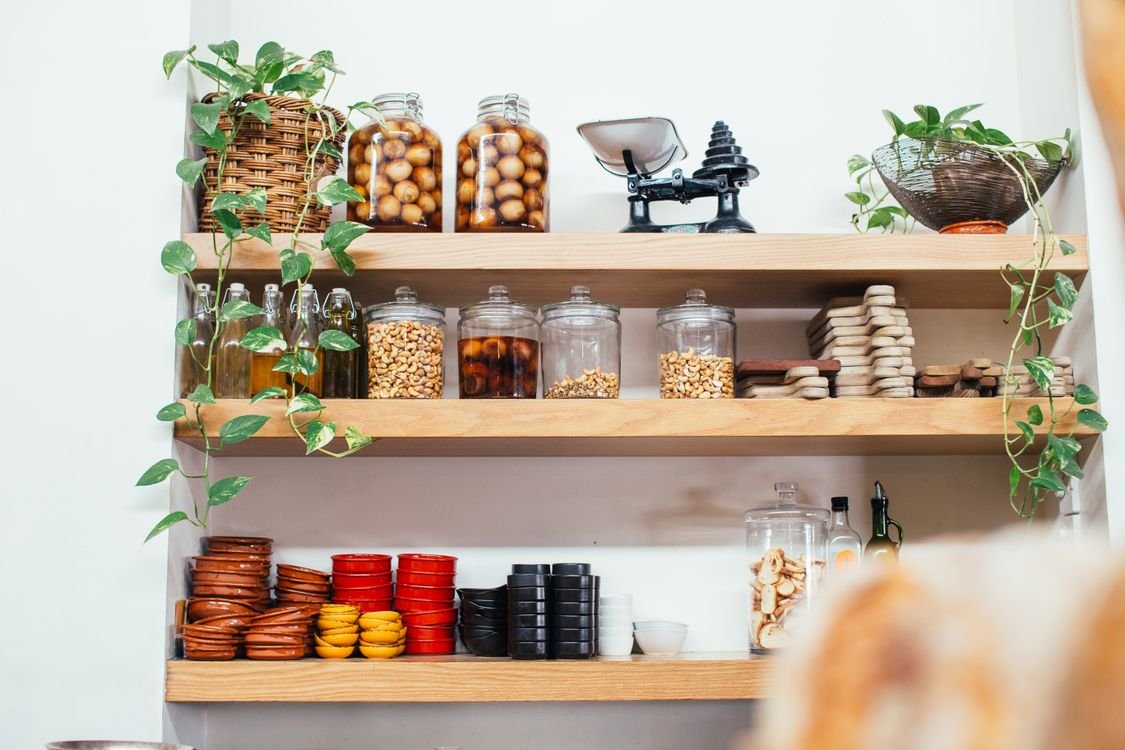
You know that Saturday feeling. You walk into the kitchen to make coffee and the counter is already covered. Spice jars crowd the stove, the pantry door hides an avalanche, and you spend ten minutes hunting for the one lid that fits the container in your hand. You did not run out of cleaning motivation. You ran out of places to put things — the exact problem good kitchen organizers are made to solve.
That is the real problem most messy kitchens have. It is not that you clean too little. It is that every item without a home turns into extra work: you move it to wipe under it, you dig past it to reach what you need, and you buy a second one because you could not see the first. Smart organizers fix the root cause. They give every item one obvious spot, so putting things away takes seconds and wiping a surface takes one pass instead of five.
This guide covers the kitchen organizers that actually save time, room by room, plus the mistakes that waste money.
Why clutter makes cleaning take so much longer
Think about what wiping a counter really involves when it is covered. You pick up the oil bottle, the salt, the knife block, the mail pile, and the random charger, wipe, then put it all back. A clear counter takes thirty seconds. A covered one takes ten minutes and you still have not cleaned anything properly.
Deep cabinets are worse. You pull out five pots to reach the one at the back, and now the floor needs cleaning too. Pantries without bins turn into a game of guess-the-jar, and fridges without zones hide leftovers until they go bad — then you are cleaning the shelf twice.
Kitchen organizers break this cycle in a simple way: fewer things to move, everything visible, and a fixed spot that makes putting things back automatic. You do not need a perfect, photo-ready kitchen. You need a kitchen where tidying is easy enough that you actually do it.
Before you buy anything: three rules
Measure first. The number one reason kitchen organizers get returned is size. Measure the shelf height, the cabinet depth, and the drawer width before you order anything. A turntable that is one inch too wide is useless.
Empty the space first. Take everything out, throw away the expired and broken stuff, and only then decide what containers you need. Most people buy half as many bins after this step.
Group by how you use things. Keep morning items together (coffee, mugs, sugar), cooking items together (oils, spices, sauces), and baking items together. When things live where you use them, you stop walking across the kitchen ten times per meal.
1. A rotating turntable for deep cabinets and pantries
If you have one deep cabinet where things vanish, start here. A turntable (most people call it a lazy Susan) lets you spin the whole shelf and grab what you need without pulling everything out. It ends the spice avalanche for good. No wonder turntables are among the most-loved kitchen organizers.
Look for one with a non-slip surface and a low rim so bottles stay put when you spin. Bamboo looks warm and suits wooden shelves; clear plastic lets you see labels from above. For tall pantry shelves, a two-tier turntable doubles the usable space. You can find rotating turntables on Amazon in round and rectangular shapes — measure your shelf first, then pick the biggest one that still spins freely. These details are what separate the best kitchen organizers from the rest.
2. Stackable shelf risers
Most kitchen shelves waste the top half of their height. A shelf riser is one of the simplest kitchen organizers: a small raised platform that creates a second level inside the same shelf, so mugs sit on top and plates slide underneath, or canned goods stack in two visible rows instead of one hidden pile.
Metal risers hold heavier dishes without bending. Choose ones with non-slip feet so they do not slide when you pull a plate out. Two small risers beat one giant one, because you can rearrange them when your dishes change.
3. Clear pantry bins with labels
Clear bins are the closest thing to x-ray vision for a pantry, which is why they are among the best-selling kitchen organizers. You can see the pasta, the rice, and the snacks at a glance, and you pull out one bin instead of knocking over six bags. Labels matter more than matching containers — a simple label that says “baking” saves you from opening three bins to find the flour.
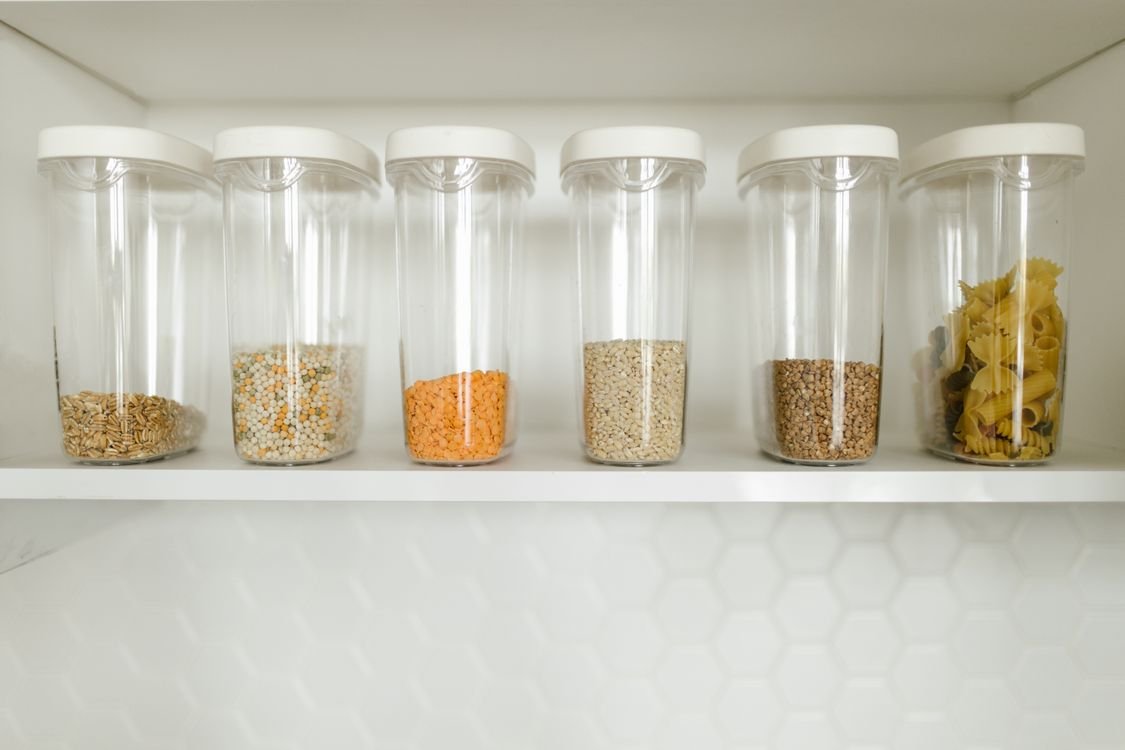
Pick bins with handles, so you can slide them out like drawers. Keep one bin per category: breakfast, snacks, baking, canned goods. When a bin is empty, that is your shopping signal. No more buying a third jar of the same spice. Simple, affordable kitchen organizers like these pay for themselves in saved time.
4. Fridge bins and a dedicated egg holder
Fridges get messy because everything is loose and round things roll. Small clear bins are the kitchen organizers that turn a fridge shelf into zones: one for yogurts, one for sauces, one for leftovers. An egg holder keeps eggs visible and stops the carton from getting crushed behind the milk.
The time saving here is real. When you can see what you have, you stop buying duplicates, leftovers get eaten before they spoil, and wiping a shelf means lifting one bin, not twenty loose items. Wash the bins once a week and the whole fridge stays fresh with barely any effort.
5. An under-sink pull-out caddy
The cabinet under the sink is where cleaning supplies go to disappear. A pull-out caddy or a small tension rod setup — two of the hardest-working kitchen organizers — turns it into a usable drawer: sprays hang on the rod, sponges sit in the caddy, and you can reach the drain cleaner without kneeling and digging.
If your under-sink space has pipes in the way, measure around them and pick a narrow caddy that fits beside the pipes. Even a ten-dollar caddy here saves you from the daily crouch-and-search routine.
6. Drawer dividers for utensils and the junk drawer
Every kitchen has a drawer that eats spatulas. Adjustable dividers split it into lanes, so spatulas, tongs, and whisks each have a lane and you stop buying your fourth peeler. Bamboo dividers expand to fit most drawers and look far better than plastic grids — proof that simple kitchen organizers beat expensive ones.
Do the same for the junk drawer. One small tray for batteries, one for tape and scissors, one for keys and coins. The junk drawer will never be beautiful, but with dividers it stops being a black hole.
7. A wall or door spice rack
Spices are small, numerous, and impossible to find in a pile. A rack on the inside of a pantry door or a wall strip near the stove puts every label at eye level — wall-mounted kitchen organizers like these free up shelf space too. Cooking gets faster because you grab the cumin in two seconds instead of reading twelve tiny jars.
If you rent and cannot drill, over-door racks hang without tools. Keep the rack near the stove but not directly above it, so heat and steam do not dull the spices.
8. A landing station by the door
Cleaning time is not only kitchen time. Keys, mail, bags, and sunglasses pile up on the first flat surface inside the door — usually the kitchen counter. A small tray or wall hooks by the entrance catches all of it before it migrates. Your counter stays clear, which means wiping it stays a thirty-second job.
The 10-minute nightly reset
Kitchen organizers only save time if things go back where they belong. The trick is a short nightly reset, not a weekend marathon:
- Put every item back in its bin, lane, or hook (five minutes).
- Wipe the now-clear counters (two minutes).
- Check the fridge bins for anything past its best (one minute).
- Take the trash and recycling out (two minutes).
Ten minutes at night buys you a clean-start morning. Most people who stick with this for two weeks say their weekend cleaning drops by half, because the mess never gets a chance to build up.
What not to buy
Skip matching container sets before you measure. A pretty set that does not fit your shelves is an expensive decoration. Skip tiny containers if you buy in bulk — they just mean more refills. And skip any organizer that needs tools and a weekend to install unless you are sure the spot is permanent. Start with one zone, prove it works, then expand.
Common questions
Do organizers really save hours, or just look nice?
They save time only when every item has one home and you use it. A bin nobody maintains is just a prettier pile. Start with one zone you use daily, like the pantry or the utensil drawer, and you will feel the difference within a week.
Should I buy a full set or piece by piece?
Piece by piece. Buy for your worst zone first, live with it for two weeks, then buy for the next zone. Full sets often include pieces your kitchen does not need.
What is the best first organizer for a small kitchen?
A turntable for the deepest cabinet plus drawer dividers. Those two fix the two spots where small kitchens lose the most time.
Start with one zone this weekend
You do not need to reorganise the whole house. Pick the spot that annoys you most — the pantry, the junk drawer, the under-sink cabinet — and fix only that one. Measure it, empty it, and give everything in it a home. When that zone stays tidy for a week with almost no effort, you will know exactly which zone to fix next. That is how a kitchen stops eating your weekends: one home per item, one zone at a time.
Related reading: Christmas Gift Guide and Christmas Gift Ideas for Beauty Lovers