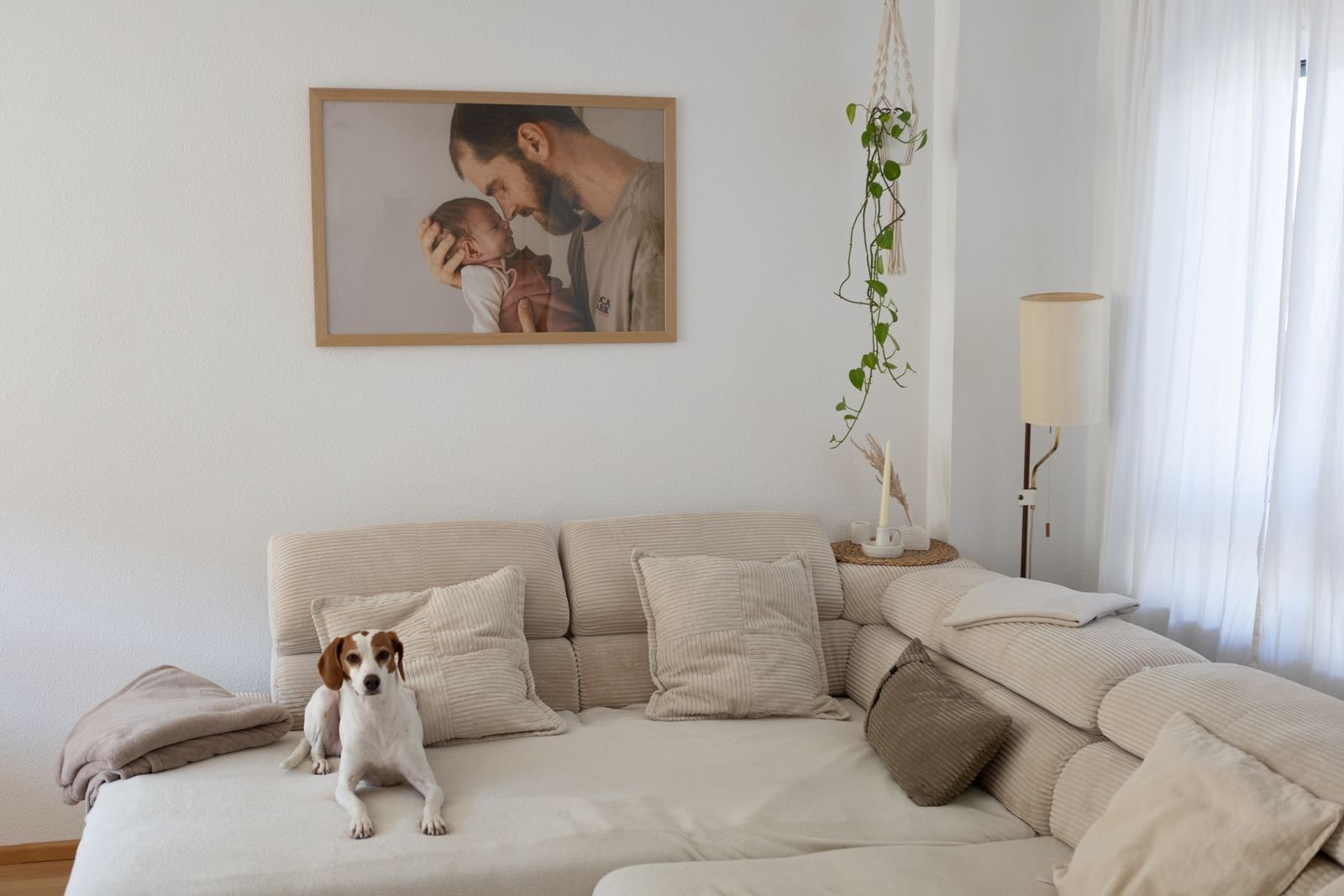

A blank wall can make a whole room feel unfinished. You move the sofa in, you set down the lamps, you hang the curtains, and then one big empty stretch of wall stares back at you. That is where canvas wall art earns its place. It adds color, warmth, and personality in one move, and it does not ask for a full room makeover to work.
This guide walks through how to pick canvas wall art that suits your home: the right size, the right layout, colors that sit well with your furniture, and hanging tips that keep the result looking planned rather than guessed. Whether you are filling one wall or refreshing several rooms, the same simple steps apply.
How to Choose Canvas Wall Art for Your Living Room
Canvas wall art for living room walls works best when it treats the room as a whole. Start by looking at what is already there: the sofa, the rug, the cushions, the curtains. Your art does not need to match everything exactly. It needs to share something with the room, such as one color, one mood, or one style, so it feels like it belongs there.
Think about the feeling you want. A calm room suits soft landscapes, gentle abstracts, or botanical prints. A lively room can carry bold color, strong shapes, or a big statement piece. If your furniture is plain and neutral, the art can be the star. If your room is already full of pattern and color, a quieter piece will balance it out.
Get the Canvas Wall Art Size Right
Size is where most people go wrong with canvas wall art, and it is almost always in the same direction: too small. A tiny canvas floating on a big wall looks lost, while a piece that fills the space properly makes the whole room feel finished.
A handy rule of thumb for the wall above a sofa is to pick art that spans about two-thirds of the sofa’s width. For a bed, the same idea works above the headboard. For a hallway or a narrow wall, a smaller piece or a vertical canvas fits better than a wide one. Measure the wall first, then measure the furniture under it, and shop with those two numbers in mind.
If you are unsure between two sizes, a paper trick helps. Cut a sheet of old wrapping paper or newspaper to the size you are considering, tape it to the wall, and live with it for a day. You will know fast whether it feels right or whether it needs to go bigger.
Single Piece or Multi-Panel?
Canvas wall art comes as a single piece or as a set of panels that hang side by side. A single large piece makes a clear statement and suits a room where you want one focal point. Multi-panel sets, such as three-piece, five-piece, and even nine-piece sets, spread one image across several canvases and suit wide walls very well.
With a multi-panel set, spacing matters. Hang the panels close together, with only a small even gap between them, so the eye reads them as one image rather than separate pictures. A nine-piece set can fill a very wide wall beautifully, while a three-piece set suits a standard sofa wall. If your wall is narrow, a single vertical piece will serve you better than a wide set squeezed into place.

Pick a Style and Color Palette
Style is personal, but a few pointers make choosing canvas wall art easier. Abstract art suits modern rooms and adds movement without a fixed subject. Landscapes bring a calm, open feeling and work well in bedrooms and living rooms. Botanical prints suit fresh, light rooms. Line art and minimal prints suit quiet, tidy spaces. Photography prints suit rooms where you want a real place or a real moment on the wall.
For color, pick one or two colors from the room and let the art carry them. If your sofa is grey and your cushions are mustard, art with mustard and soft grey tones will tie the room together. If your room is full of strong color already, art in softer tones will give the eye a resting place. You do not need to match every cushion. One shared color is enough to make the whole room feel connected.
Canvas Wall Art Finishes: Framed, Unframed, or Wrapped Edges
Canvas prints come in a few finishes. A gallery-wrapped canvas has the image folded around the sides, so it looks finished without a frame and suits modern rooms. A framed canvas suits traditional rooms and adds a sense of polish, especially for landscapes and classic subjects. An unframed canvas with clean white edges suits minimal rooms.
There is no right answer here, only what suits your home. If your room has a lot of wooden furniture, a wooden frame can tie in nicely. If your room is sleek and plain, a frameless wrapped canvas keeps that clean look going.
Hanging It Well
Hang canvas wall art at eye level, which for most people means the center of the piece sits at about eye height when standing. Above a sofa or a console, leave a small gap between the furniture and the bottom of the frame, roughly a hand’s width or a little more, so the art and the furniture read as one group rather than two separate things.
Use proper wall fixings for the weight of the piece, and check the wall type before you drill. In a rented home, leaning a large canvas on a console or a shelf can work well, and it lets you move the art around without marks on the wall. For a group of smaller pieces, lay them out on the floor first and settle the arrangement before anything goes on the wall.
Caring for Canvas Wall Art
Canvas wall art is easy to look after. A light dust with a dry, soft cloth every now and then keeps it fresh. Keep it out of direct sun where you can, since strong sunlight can fade colors over time. Damp rooms, such as a bathroom with no fan, are harder on canvas than dry rooms, so a print or a framed piece behind glass may suit those spots better.
If a canvas ever sags slightly, that is normal with changes in temperature and humidity through the year. Most pieces settle back on their own, and a gentle press from behind can help.
Mistakes Worth Skipping
A few common canvas wall art slips are easy to avoid. Hanging art too high is the most frequent one: if you have to look up to see it, bring it down. Picking a piece that is too small for the wall is the second. Buying art in a rush, without measuring, is the third. And filling every wall at once can make a home feel crowded. One good piece on the main wall beats three small pieces scattered without a plan.
A Last Word
Good canvas wall art does not need to be grand or costly. It needs to fit the wall, share something with the room, and hang at a height where you can enjoy it. Measure first, pick a style you actually like living with, and let the wall do the rest.
Related reading: Smart Home & Kitchen Organizers That Save You Hours of Cleaning